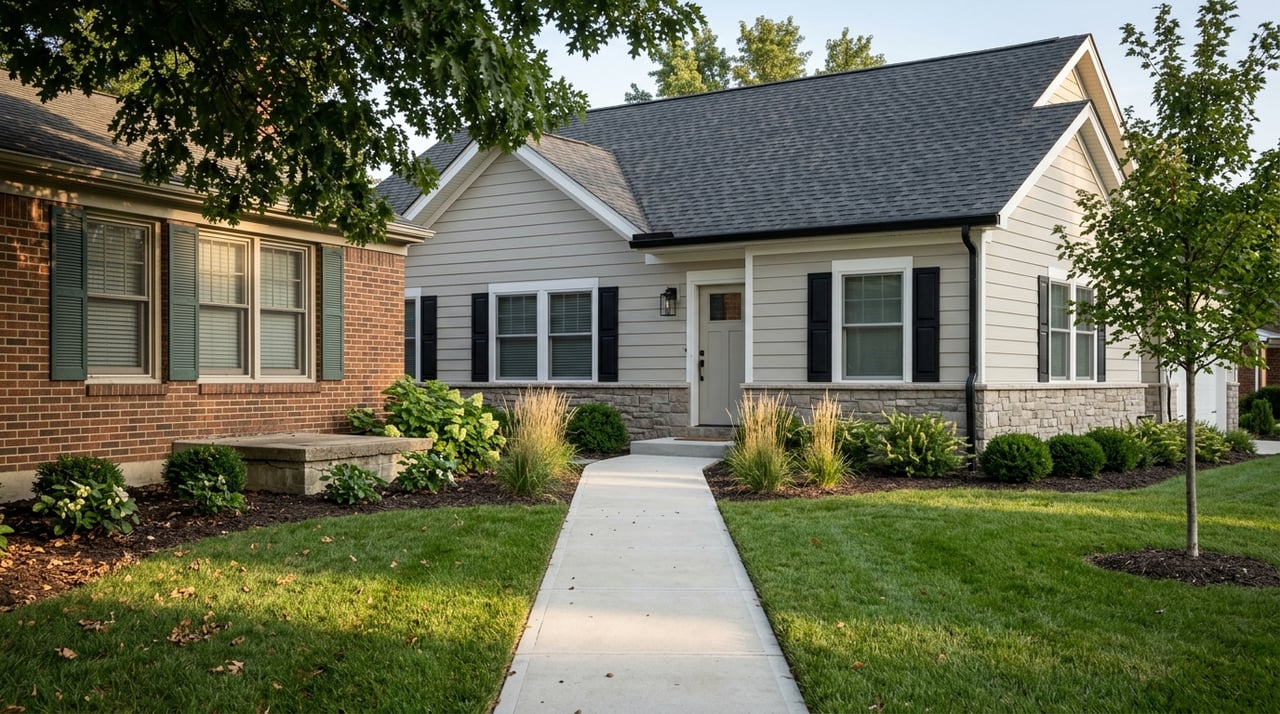
If you are trying to decide between a brand-new home and an existing one in Spotsylvania, you are not alone. It is one of the most common questions buyers face, especially when timing, budget, and long-term comfort all matter at once. The good news is that Spotsylvania gives you real options, with ongoing new-home development and a large base of established homes already on the market. This guide will help you compare both paths so you can move forward with more confidence. Let’s dive in.
Spotsylvania gives you both options
Spotsylvania County continues to grow, which helps explain why both new construction and resale homes are active choices for buyers. The county’s population was estimated at 152,021 in 2024, up 8.5% from 2020, and there were 58,061 housing units. The county also had 707 building permits in 2024, and FRED shows 681 new private housing structures authorized in 2025.
That ongoing pipeline matters if you are hoping to compare a brand-new home with an established one. County budget data also shows a housing mix that is still led by detached single-family homes at 76.4%, with 14.1% attached units and 9.5% multifamily units. In simple terms, Spotsylvania offers enough inventory variety that your decision can be based on fit, not just availability.
Why location rules matter here
In Spotsylvania, the new construction versus resale question is shaped in part by county land-use policy. The comprehensive plan uses a Primary Development Boundary, often called the PDB, to focus higher-density growth in areas intended for public water and sewer while preserving rural character outside that boundary. The plan also notes that roughly one-third of the PDB remains undeveloped or underdeveloped.
For you, that means location can affect more than commute time or surroundings. It can also affect infrastructure, utility access, and how straightforward a new build timeline may be. If you are comparing homes in different parts of the county, this is one of the most important local questions to ask.
New construction in Spotsylvania
A new home can be appealing for a simple reason: everything is brand new. You may also have some ability to choose finishes or features, depending on how early in the build process you enter the contract. For buyers who want a fresh start and warranty coverage, that can be a strong advantage.
In Spotsylvania, though, new construction is also a more process-driven path. The county requires an approved site plan for all new residential development and redevelopment that disturbs more than 2,500 square feet. After submission, staff have five days to check whether the application is complete, the initial review takes three weeks, and each resubmission review also takes three weeks.
The county also states that construction cannot begin until the permit is approved and fees are paid. A home cannot be occupied until a certificate of occupancy is issued. That clear sequence is important because it means your move-in date depends on a chain of approvals, construction progress, and final sign-off.
What can affect a new build timeline
Some timelines are straightforward, but others can stretch. Spotsylvania’s comprehensive plan notes that development outside the Primary Development Boundary that seeks public water and sewer connection generally needs a 2232 review. Outside the boundary, applicants should also show adequate well and septic capacity.
The plan further notes that some areas within the PDB are difficult to serve and may be delayed by infrastructure upgrades. If you are considering a new-build community, it is wise to ask whether any utility or infrastructure issues could affect delivery timing. A home may look close to completion, but local approvals and service capacity still matter.
What to ask about builder deposits and choices
Financing and contract terms deserve close attention with a new build. The CFPB says a builder may ask for upfront earnest money on a home that is not yet built. It also says you do not have to use the builder’s affiliated lender.
You should also ask what design selections are still open and what has already been fixed in the contract. The amount of customization often depends on how far along the home is in the build process. If personalizing the home is a top priority, timing your purchase early enough can make a big difference.
What warranties usually cover
Warranty coverage is one of the biggest reasons some buyers prefer new construction. According to the FTC, new-home warranties generally provide limited coverage of one year for workmanship and materials on most components, two years for HVAC, plumbing, and electrical systems, and sometimes up to 10 years for major structural defects.
That can offer peace of mind, but it is still important to understand the limits. Coverage varies, and not every repair issue is treated the same way. You will want to review the warranty documents carefully so you know what is included, what is excluded, and how claims are handled.
Resale homes in Spotsylvania
A resale home usually offers one major advantage right away: speed. Because an existing home does not go through the county’s site-plan review, permit approval, and certificate-of-occupancy sequence before you move in, the path to occupancy is often faster than with new construction. If you are relocating on a deadline or trying to coordinate a sale and purchase closely, that matters.
Resale homes also let you buy into an area where the streetscape and surrounding character are already established. Spotsylvania’s land-use guidance notes that infill should maintain the character of surrounding subdivisions and, outside the PDB, preserve rural viewsheds and buffering. For many buyers, that means it is easier to understand what the setting feels like before making an offer.
Why inspections matter with resale
With a resale home, the condition of the property becomes a bigger part of your decision. HUD strongly encourages an independent home inspection and notes that an inspection can reveal hidden defects before they become more expensive to fix. HUD also recommends making the purchase contingent on a satisfactory inspection when possible.
Fannie Mae says inspectors focus on key areas such as floors, doors, the foundation, roof, walls and ceilings, windows, and electrical systems. That gives you a clearer picture of the home before closing. In many cases, a resale home offers more condition visibility up front, even if it may also come with future repair needs.
Budgeting for repairs and ownership costs
A finished home may save you time, but it may require more upkeep planning. The CFPB recommends budgeting for maintenance, repairs, utilities, and homeowners’ association fees as part of your total monthly home payment. It also notes that closing costs typically run 2% to 5% of the purchase price.
That is an important tradeoff to keep in mind. With resale, you may have less opportunity to pick finishes, but you can often evaluate the property’s condition more directly before closing. The question becomes whether you prefer a home that is ready now, even if updates or repairs may come later.
New construction vs. resale at a glance
Here is a simple way to compare the two paths in Spotsylvania:
| Factor | New Construction | Resale Home |
|---|---|---|
| Move-in timing | Often longer and tied to construction and county approvals | Usually faster |
| Customization | May be possible, depending on build stage | Limited, since the home is already finished |
| Condition at move-in | Brand new systems and finishes | Varies by age and maintenance |
| Warranty coverage | Often includes limited builder warranty coverage | Usually no builder warranty |
| Inspection focus | Contract terms, build stage, and warranty details matter | Independent inspection is especially important |
| Setting | May be in a developing area | Usually in a more established setting |
How to choose the right fit
The best choice depends on what matters most to you right now. A new build is often a better fit if you want warranty protection, can handle a more process-heavy timeline, and are comfortable making decisions before move-in. A resale home is often a better fit if you need faster occupancy, prefer an established setting, or want the home’s condition evaluated before closing through inspection.
In Spotsylvania, a few local questions can help you narrow it down quickly:
- Is the property inside or outside the Primary Development Boundary?
- Is public water and sewer available, or will the home rely on well and septic?
- How much of your budget may go toward builder deposits, HOA fees, repairs, or updates?
- Do you care more about move-in speed or about owning a brand-new home with warranty protection?
If your move also involves downsizing, a long-distance relocation, or coordinating the sale of another home, the right answer may depend as much on logistics as on the house itself. In those moments, having a calm, local guide can make the decision feel much more manageable.
Whether you are weighing a new build against an established home, planning a senior move, or relocating on a tight timeline, Michelle Nicely offers the kind of steady, hands-on guidance that helps you make a confident move in Spotsylvania.
FAQs
What is the main benefit of new construction in Spotsylvania?
- New construction can offer brand-new finishes and systems, possible design selections depending on build stage, and limited warranty coverage.
What is the main benefit of buying a resale home in Spotsylvania?
- A resale home often offers a faster move-in timeline and a chance to buy in an area with an already established setting.
Why does the Primary Development Boundary matter in Spotsylvania?
- The Primary Development Boundary helps shape where higher-density growth and public water and sewer service are intended, which can affect development timing and utility questions.
Should you get an inspection on a resale home in Spotsylvania?
- Yes. HUD strongly encourages an independent home inspection, and it can help uncover issues before closing.
What costs should Spotsylvania buyers budget for beyond the purchase price?
- Buyers should plan for closing costs, maintenance, repairs, utilities, and any homeowners’ association fees as part of the total cost of ownership.