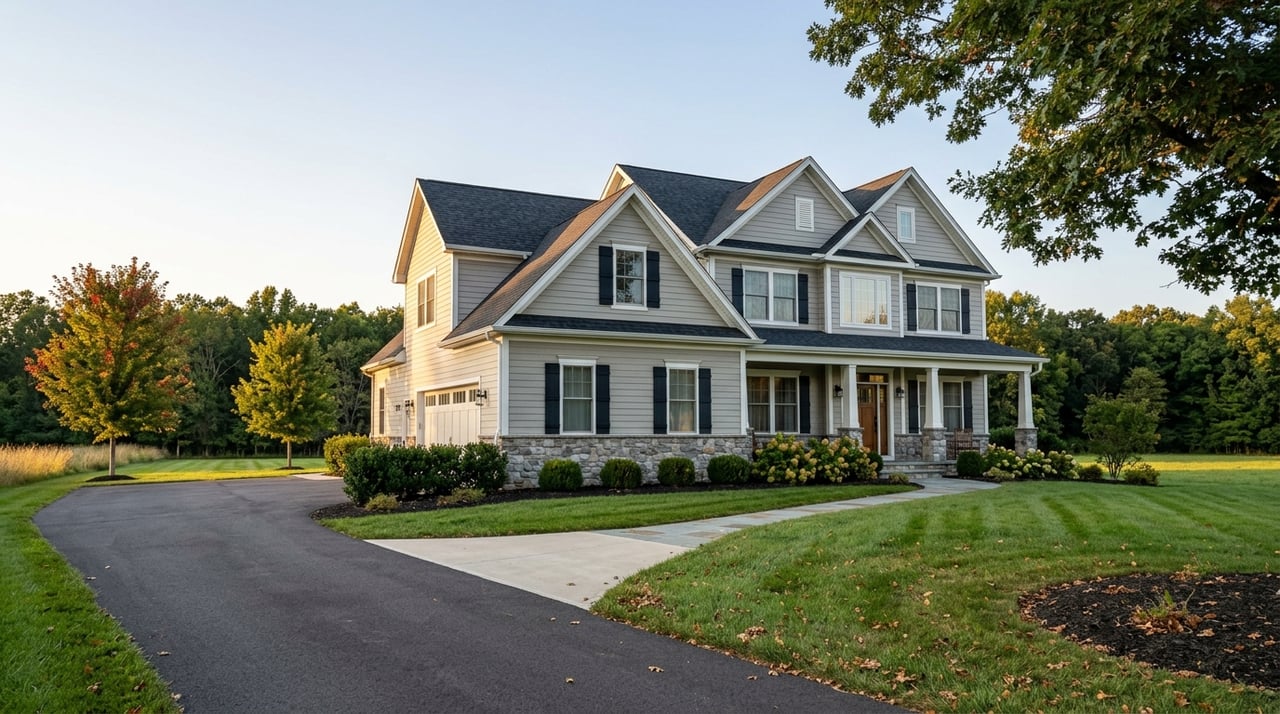
Dreaming of a home with room to breathe in Fauquier County? You are not alone. Buying a house with land can open the door to privacy, views, outbuildings, and space for your plans, but it also comes with questions that do not always show up in a typical suburban purchase. This guide will help you understand what really matters when buying a home with land in Fauquier County, so you can move forward with more clarity and confidence. Let’s dive in.
Why land works differently in Fauquier County
Fauquier County is known for its rural character, and that shapes what buying land looks like here. According to the county, the Rural Agricultural and Rural Conservation zoning districts make up 90.7% of the county’s land area, while the county’s service districts cover less than 10%.
That matters because acreage in Fauquier County is often tied to agricultural use, conservation goals, and low-density development. In practical terms, you are usually buying more than open space. You are buying a parcel that needs to work for access, utilities, soils, drainage, and your long-term plans.
Focus on usable land, not just total acres
One of the biggest mistakes buyers make is assuming more acreage always means more value. In reality, the best property is often the one with the most functional buildable area and the fewest hidden complications.
A large parcel may still have limits if part of it sits in floodplain, has poor soils, lacks easy road access, or cannot support future improvements. Before you fall in love with the number of acres, make sure the land actually fits how you want to live.
Ask how the property supports your goals
Start with your lifestyle. Do you want extra privacy, room for animals, a garden, a workshop, or simply more distance from neighbors? Your answer will help you evaluate whether the parcel truly supports your day-to-day needs.
Then look beyond the home itself. A property that feels perfect today may not be the right fit if adding an outbuilding, maintaining the road, or managing the land becomes harder or more expensive than expected.
Check zoning before you make an offer
In Fauquier County, zoning approval is required before any new structure is built on a property, including agricultural buildings. Zoning approval is also required before grading or other land disturbance occurs.
That means if you are thinking about adding a barn, shop, shed, or other structure later, you should confirm what the county allows before you buy. Do not assume that owning acreage automatically gives you broad freedom to build.
Understand RA and RC land
The county describes Rural Conservation land as sensitive mountain and forest land suited to very low-density residential use. Rural Agricultural land is the district where agriculture and forestry predominate, and it also includes large-lot farmette-style residential development.
Those categories can affect what is feasible on a property now and in the future. If flexibility matters to you, zoning should be one of the first things you review.
Verify subdivision potential early
If part of your plan is to divide the property later for family, resale, or long-term investment, verify that before you move forward. In Fauquier County, buyers of RA or RC property need a Subdivision Potential letter to understand theoretical maximum density.
Even then, the county makes clear that the maximum density is only theoretical. Drainfield sites, road frontage, floodplain, and open-space requirements can reduce what is actually possible on the land.
Do not rely on assumptions about future splits
Family subdivisions come with limits, including immediate-family transfer rules and a 10-year transfer restriction. Large-lot divisions may apply only to certain parcels and can require minimum parcel sizes, private-street covenants, and VDOT entrance approval.
In short, acreage alone does not guarantee future flexibility. If exit strategy matters to you, this is something to confirm up front.
Look for easements and land-use restrictions
Some Fauquier County properties are part of Agricultural and Forestal Districts, conservation easements, or Purchase of Development Rights programs. These tools are meant to preserve farmland and rural character, and they can affect what an owner may do with the property.
For example, conservation easements transfer some development rights away from the owner. If you are buying with plans for future building, subdivision, or timbering, you will want to verify whether any easement, district enrollment, or deed restriction limits those uses.
Tax benefits may come with tradeoffs
Properties in Agricultural and Forestal Districts may qualify for Special Land Use Assessment, which can lower real estate taxes. That can be helpful from a cost standpoint.
At the same time, preservation-related programs can come with restrictions that affect future development rights. Lower taxes are appealing, but you will want to understand the full picture before you commit.
Pay close attention to wells and septic
Many homes with land in Fauquier County rely on private wells and onsite septic systems. If a property is not served by public water or public sewer, Virginia Department of Health permitting is required before the county will issue a building permit.
For buyers, this means water and wastewater are not side issues. They are central parts of whether the property functions well now and whether it can support future changes.
Water testing matters
Virginia Department of Health says newly constructed wells must be tested for bacteria when installed. It also recommends that prospective buyers test private well water, even though ongoing testing after installation is the owner’s responsibility.
That makes water quality an important due diligence item. You should think about testing, filtration, pump service, and future troubleshooting as part of the cost of owning a rural property.
Septic systems need ongoing care
Septic maintenance is another long-term ownership responsibility. Virginia Department of Health recommends that the average household septic system be inspected at least every three years.
Alternative onsite sewage systems require even more attention. They must be inspected at least annually by a licensed operator, and owners are responsible for keeping maintenance records and following the system’s operation and maintenance manual.
Review roads, access, and maintenance responsibility
Private roads and shared driveways are common on rural parcels. In Fauquier County, neither the county nor VDOT maintains private roads.
Instead, the owners who use those roads are responsible for maintenance, drainage channels, signs, and snow removal. That makes access documents and road agreements especially important during the buying process.
Access should be clear on paper
A beautiful property can become frustrating quickly if the legal access is unclear or the road upkeep is costly. You will want to review ingress-egress easements, title details, and any shared maintenance arrangements carefully.
This is one of those issues that may not be obvious during a quick showing, but it can have a major impact on day-to-day ownership.
Watch for floodplain and soil issues
Floodplain and soils can be major hidden variables when buying land. Fauquier County has about 33,000 acres of mapped floodplain, which is about 8% of the county’s land area, and dwellings may not be built in the floodplain.
The county also notes that soils with hydric inclusions, shallow bedrock, or a high water table can limit septic options, complicate excavation, and contribute to wet basement or crawl-space problems. These are not small details. They can affect cost, usability, and future plans.
Insurance may also be part of the equation
If a property is near streams, low areas, or mapped floodplain, insurance and drainage planning matter. Fauquier County notes that standard property insurance does not cover flood damage, and flood insurance may be required by a lender.
That is why land evaluation should include more than a scenic drive and a house tour. The shape, drainage, and condition of the land deserve real attention.
Understand rural financing and appraisal differences
Financing a home with land can look different than financing a typical house in a subdivision. Some loan options work well in rural areas, but the property still has to meet program and lender rules.
USDA financing may be an option if the address is in an eligible rural area and your household income meets program guidelines. For USDA Section 502 Direct Loans, eligible properties must not be designed for income-producing activities.
VA loans and acreage
VA financing can also work on rural property, including farm residences. The VA does not limit the number of acres a VA-guaranteed property may have, but the home must be your primary residence and the loan can only be used for residential purposes, not to purchase a business.
The VA also states that barns, sheds, corrals, stables, and pastures may be considered in appraisal analysis. Livestock, crops, and equipment are not included in value for VA purposes.
Appraisals may take more patience
Conventional financing can be more appraisal-sensitive on rural parcels. Fannie Mae notes that rural properties may have a shortage of recent comparable sales, so appraisers may need to use older or more distant sales when those are the best available options.
That can mean a slower or more nuanced valuation process. If you are buying in a rural part of Fauquier County, it helps to be prepared for that possibility.
Budget for the true cost of owning land
The purchase price is only part of the story. Owning a home with land often comes with more ongoing maintenance than buyers expect.
Common costs can include repairs, utilities, property taxes, insurance, closing costs, septic service, well maintenance, road upkeep, and flood insurance if needed. On acreage properties, those items can shape your monthly budget just as much as the mortgage payment.
Hidden costs add up
The biggest surprises for many buyers are not dramatic. They are recurring. Pump service, filter replacement, grading a driveway, maintaining drainage, and addressing water issues can all become part of rural ownership.
That does not mean buying land is a bad idea. It simply means going in with a realistic plan.
A smart way to evaluate acreage homes
When you look at homes with land in Fauquier County, it helps to use three simple filters at the same time:
- Lifestyle fit: Does the property support the way you want to live?
- Buildability and flexibility: Can the land support your future plans within county rules?
- Financing fit: Will the property work with your loan program and appraisal expectations?
In Fauquier County, those three factors often matter more than raw acreage alone. A well-chosen property can give you the space and freedom you want without creating avoidable headaches later.
Buying a home with land takes a different kind of due diligence, but you do not have to sort through it alone. If you want clear guidance, careful research, and steady support as you weigh rural properties in Virginia, Michelle Nicely is here to help you move forward with confidence.
FAQs
What should I check first when buying a home with land in Fauquier County?
- Start with zoning, access, wells and septic, floodplain, soils, and any easements or subdivision restrictions that could affect how you use the property.
Can I add a barn or shop on a Fauquier County property?
- Maybe, but Fauquier County requires zoning approval for new structures, and additional review may be needed for land disturbance, setbacks, or floodplain conditions.
Can I split land later if I buy acreage in Fauquier County?
- Not always. Subdivision potential must be verified, and actual options may be limited by zoning rules, road frontage, drainfield capacity, easements, and family-transfer restrictions.
Do homes with land in Fauquier County usually have wells and septic systems?
- Many do, especially on rural parcels, so buyers should review water testing, septic condition, permitting history, and ongoing maintenance responsibilities carefully.
Are private roads common with acreage properties in Fauquier County?
- Yes, and private roads are typically maintained by the owners who use them, which is why maintenance agreements and legal access review are important.
Is financing harder for a home with land in Fauquier County?
- It can be more detailed. USDA, VA, and conventional financing may all work in some cases, but eligibility, appraisal support, and property use can affect the loan process.